
Best Electric Ride-On Lawn Mowers (UK Buying Guide)
By The Garden Machinery Guide Team · 9 min read · Updated 5 July 2026
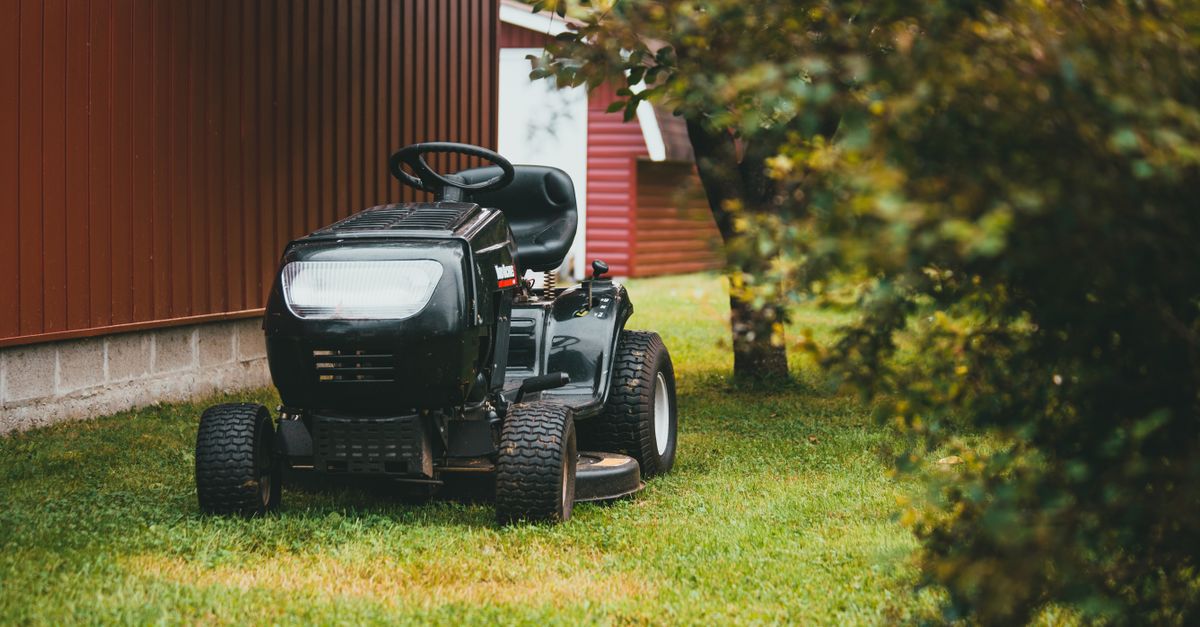
Photo by Erik Mclean on Pexels
Petrol has always been the default for ride-on mowers, but battery power is catching up fast. If you’re weighing up a riding electric lawn mower against a petrol one, or just want to know whether a battery riding mower can actually cope with a proper-sized lawn, this guide will help you decide.
Who this guide is for
This guide is for anyone with a lawn too large or too hilly to comfortably manage with a push mower, typically half an acre or more, who wants to avoid the noise, fumes, and servicing hassle of a petrol ride-on. It’s aimed at gardens with mains power or a garage for charging, and buyers with a realistic budget: electric ride-ons currently sit at a premium over equivalent petrol models. If your lawn is under a quarter of an acre, a large cordless self-propelled mower will likely do the job for less money, so it’s worth reading a smaller-mower guide first before committing to a ride-on of any kind.
Quick picks
| Use case | What to look for |
|---|---|
| Medium lawn (half to one acre), flat ground | A single-battery ride-on with a 76-84cm cutting deck and at least 60-90 minutes runtime |
| Larger or slightly sloped lawns (1-2 acres) | A twin-battery model with a wider deck (90cm+) and good ground clearance |
| Buyers who mow little and often | Any battery ride-on with hot-swappable or fast-charging batteries, so you’re never waiting overnight |
| Buyers worried about noise or nearby neighbours | Any electric ride-on, this is where they genuinely outperform petrol |
| Tight budget, large lawn | Consider a petrol ride-on instead, battery models cost significantly more for equivalent cutting width |
How to choose
- Cutting width and lawn size. Battery ride-ons are still mostly available in 76-92cm deck widths. Match the deck to your lawn: too narrow and you’ll be mowing for hours, too wide and manoeuvring around borders becomes a chore.
- Runtime versus lawn size, not just battery capacity. A stated runtime of 60-90 minutes sounds generous until you realise a large, complex lawn with lots of turning eats into it fast. If your lawn takes over an hour to cut on a petrol machine, check the battery model can genuinely finish the job on one charge, or budget for a spare battery.
- Charging time and routine. Most battery ride-ons take several hours to fully charge from empty. If you mow twice a week on a big lawn, work out whether an overnight charge fits your routine, or whether you’ll need a quick top-up option.
- Slopes and terrain. Battery ride-ons tend to be slightly heavier due to the battery packs, which can help traction on modest slopes but isn’t a substitute for checking the manufacturer’s maximum gradient rating. Steep or uneven ground still favours a well-specified petrol machine.
- Storage and charging setup. You’ll need a dry space with a power socket nearby. Garages and sheds with existing electrics work fine; if you’re relying on an extension lead across the garden, factor that into your decision.
Product recommendations
The Cub Cadet XR3 ER is one of the more established battery ride-ons sold in the UK, with a wide cutting deck and twin batteries that give it a genuine shot at tackling larger lawns without a mid-mow recharge. It’s built like Cub Cadet’s petrol ride-ons underneath, which shows in the fit and finish, and it suits buyers who want a ride-on that doesn’t feel like a compromise next to a petrol equivalent, provided you’re comfortable with the higher price tag.
The Hyundai HYM80Li is a more accessible entry point into battery ride-ons, with a smaller footprint that suits medium lawns and gardens where storage space is at a premium. It won’t match the twin-battery models for outright runtime on the largest plots, but for a half-to-one-acre lawn it’s a sensible, better-value way into electric ride-on mowing.
The Mowox MNA 13875 sits at the more affordable end of this category and is worth a look if you want to try a battery ride-on without spending petrol-ride-on-plus-premium money. Expect a narrower deck and shorter runtime than the pricier options, so it suits smaller-to-medium lawns rather than sprawling grounds.
If none of these quite fit, look for the same things regardless of brand: deck width matched to your lawn, a realistic runtime for your mowing routine, and a battery/charger warranty of at least two to three years, since the battery pack is the most expensive part to replace.
Pros and cons
Battery ride-on mowers in general
Pros:
- Much quieter than petrol, useful for early mornings, weekends, or mowing near neighbours
- No fuel, spark plugs, air filters, or oil changes to think about
- Instant starting, no choke, no pull cord, no flooded engine
- Lower running costs per cut once you’ve bought the machine
Cons:
- Higher upfront price than an equivalent petrol ride-on
- Runtime is finite and charging takes hours, so back-to-back mowing sessions need planning
- Fewer models and dealers to choose from compared with petrol ride-ons
- Heavier battery packs can make some models feel less nimble on tight turns
Buying considerations
Battery packs on ride-on mowers are a significant chunk of the purchase price, so check what the warranty actually covers and for how long, typically two to three years is the current norm. Batteries lose capacity gradually over years of use, so a machine that comfortably does 90 minutes when new may do noticeably less after several seasons; buying a model with a bit of runtime headroom for your lawn size will help it stay useful for longer. On the maintenance side, you’ll still need to keep blades sharp, tyres at the right pressure, and the deck free of clippings, but you’ll skip the annual service, oil changes, and winter fuel-stabilising routine that petrol ride-ons need. Storage is straightforward as long as you have a dry space with power nearby; unlike petrol machines, you don’t need to worry about stale fuel if the mower sits unused over winter, just keep the battery topped up periodically rather than letting it sit fully discharged.
FAQs
Are electric ride-on mowers powerful enough for a large lawn? For most domestic lawns up to around two acres, yes, provided you choose a deck width and battery capacity suited to the area. Very large or heavily wooded plots with lots of obstacles may still suit a petrol ride-on better, simply because runtime and refuelling are less of a constraint.
How long does a battery ride-on mower take to charge? Most take several hours for a full charge from empty, often overnight. Some models support faster charging or offer a second battery so you can swap and keep mowing, which is worth considering if your lawn takes longer than the battery lasts.
Is a battery riding mower cheaper to run than petrol? Over time, yes. You avoid fuel costs, oil changes, and routine servicing, so running costs are lower. The trade-off is a higher purchase price, so the savings build up gradually rather than being immediate.
Can I leave a battery ride-on mower outside? No, treat it like any other battery-powered garden tool. Store it in a dry shed or garage and keep the battery pack out of extreme heat or frost where possible, to protect its lifespan.
Final recommendation
If you’ve got a half-to-two-acre lawn, access to power for charging, and you value quiet, low-maintenance mowing over the lowest possible purchase price, a battery ride-on mower is a genuinely good choice right now, and models like the Hyundai HYM80Li or Cub Cadet XR3 ER are solid starting points depending on your lawn size and budget. If your priority is the lowest running cost per acre on a very large or demanding plot, it’s worth comparing against our guide to the best petrol ride-on mowers before you decide, since petrol still has the edge on raw endurance for the biggest gardens.
Some links on this page may be affiliate links. See our affiliate disclosure for details.
Disclosure: Some links on this site may be affiliate links. If you buy through them, we may earn a commission at no extra cost to you. Our guides are written to help you choose suitable products, not just promote the highest-paying options.