
Best Cordless Cylinder Lawn Mowers
By The Garden Machinery Guide Team · 7 min read · Updated 5 July 2026
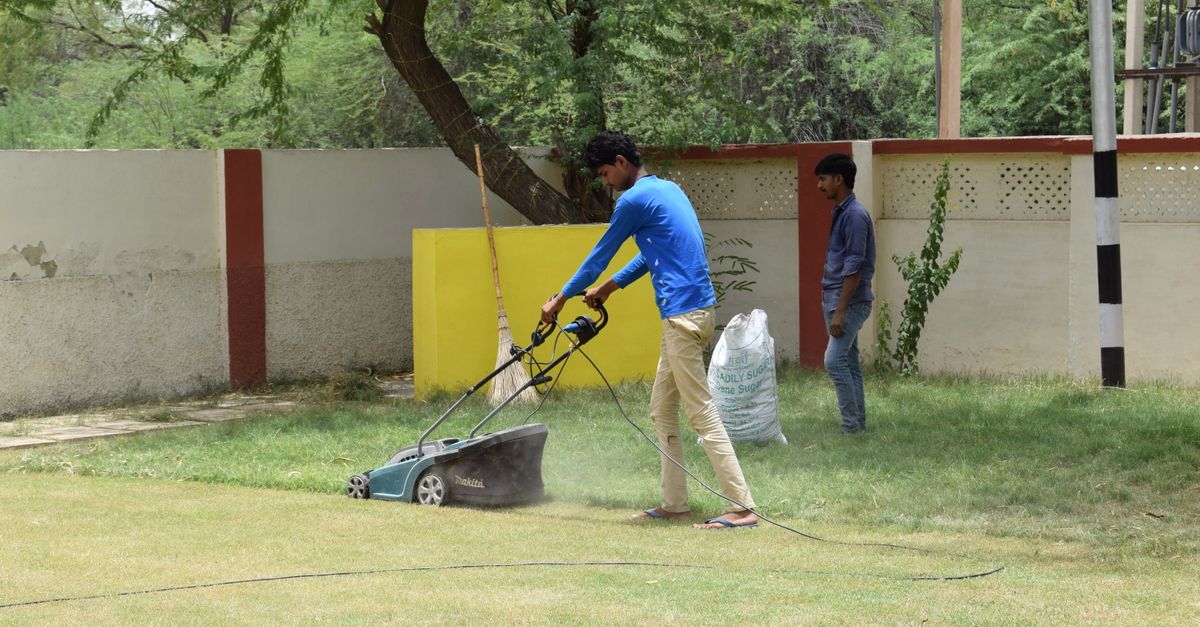
Photo by Rajesh S Balouria on Pexels
If you’ve searched for a cordless cylinder lawn mower, you’re probably after that neat, striped finish you get from a cylinder mower, but without trailing a cable around the garden. It’s a smaller and more specialist market than cordless rotary mowers, so it’s worth knowing exactly what’s available and whether it actually suits your lawn before you buy.
Key answer
Cordless (battery-powered) cylinder mowers exist but are a niche product, dominated by brands like Allett, and they’re best suited to smaller, well-maintained lawns where you want a fine, striped finish. For most gardens, a cordless rotary mower is more practical, more affordable and better at coping with longer or uneven grass; a cylinder mower is the choice when lawn appearance and cutting quality matter more than convenience.
Detailed explanation
Cylinder mowers cut using a rotating cylinder of blades against a fixed bottom blade, a scissor-like action that gives a cleaner, closer cut than a rotary mower’s spinning blade. This is why bowling greens, cricket squares and manicured lawns are cut with cylinder mowers: the finish is sharper and the stripes are more defined.
The trade-off is that cylinder mowers don’t cope well with long, thick or uneven grass. They’re designed for regular, frequent cutting on lawns that are already in reasonably good condition, not for reclaiming an overgrown patch. Corded electric cylinder mowers have been around for decades and remain popular for smaller UK gardens, but true cordless cylinder mowers are a much smaller category, largely because the cutting cylinder needs consistent power and torque, which is harder to deliver efficiently from a battery than a simple rotary blade.
When you do find a battery cylinder mower, it will usually be a premium product aimed at people who care a lot about lawn quality, rather than a budget option. Expect a higher price than an equivalent cordless rotary mower, a narrower cutting width suited to smaller lawns, and features like interchangeable cutting cassettes (for scarifying or verti-cutting) that reflect the enthusiast market these mowers are built for.
Practical tips
- Match the mower to your lawn size. Cylinder mowers, cordless or otherwise, are best on lawns up to around 300-400m²; anything larger and battery run-time or cutting width becomes limiting.
- Cut regularly. Cylinder mowers give their best results when the grass is never allowed to get long between cuts, ideally weekly through the growing season.
- Check the cutting height range. Some cylinder mowers cut lower than most rotary mowers, which suits fine lawns but can scalp rougher or uneven grass.
- Consider battery capacity against your lawn size. Ask what area a full charge is rated to cover, and buy a spare battery if you’re near the limit.
- Look at cassette or cylinder options. Some models let you swap the cutting cylinder for a scarifying or brushing cassette, useful if you want one machine for lawn care through the year.
- Keep blades sharp. Cylinder mower blades need periodic sharpening (or a bottom blade adjustment) to keep the scissor cut clean; a blunt cylinder tears grass rather than cutting it.
Common mistakes
- Buying a cylinder mower for a lawn that’s often left to grow long. Cylinder mowers struggle with anything beyond a light trim, so if you mow irregularly, a rotary mower will cope far better.
- Assuming cordless means as powerful as mains electric. Battery cylinder mowers can lose some torque compared with a corded equivalent, so check reviews and specs for how they handle denser grass.
- Ignoring lawn size when comparing cutting widths. A narrow cylinder mower on a large lawn means far more passes and mowing time than a wider rotary mower.
- Skipping blade maintenance. Because the cut relies on a precise scissor action between two blades, letting the cylinder go blunt or misaligned quickly ruins the finish that’s the whole point of buying one.
- Choosing on price alone. Cylinder mowers, especially cordless ones, sit at the premium end of the market; buying a cheap, poorly built one usually gives worse results than a mid-range rotary mower.
Related guides
- Best cordless lawn mowers for small to medium gardens
- How to get lawn stripes with a rotary mower
- Cylinder vs rotary mowers: which is right for your lawn?
FAQs
Are cordless cylinder mowers as good as corded ones? They can get close, but corded electric cylinder mowers generally offer more consistent power since they’re not limited by battery capacity. Cordless versions have improved a lot, but check run-time and cutting performance on denser grass before assuming parity.
Can a cylinder mower cut long grass? Not well. Cylinder mowers are designed for regular cutting on lawns that are already reasonably short; if your grass has grown long, mow it down gradually with a rotary mower first, or cut with the cylinder mower on a higher setting over several passes.
Is a cylinder mower worth it for an average UK garden? For a typical family lawn that’s mown occasionally and used for play, a rotary mower is usually the more practical and affordable choice. A cylinder mower is worth considering if you specifically want a fine, striped finish and are prepared to mow more often.
How much does a cordless cylinder mower cost? Expect to pay noticeably more than a cordless rotary mower of similar cutting width, reflecting the smaller, more specialist market and the precision engineering involved in the cutting cylinder.
Disclosure: Some links on this site may be affiliate links. If you buy through them, we may earn a commission at no extra cost to you. Our guides are written to help you choose suitable products, not just promote the highest-paying options.